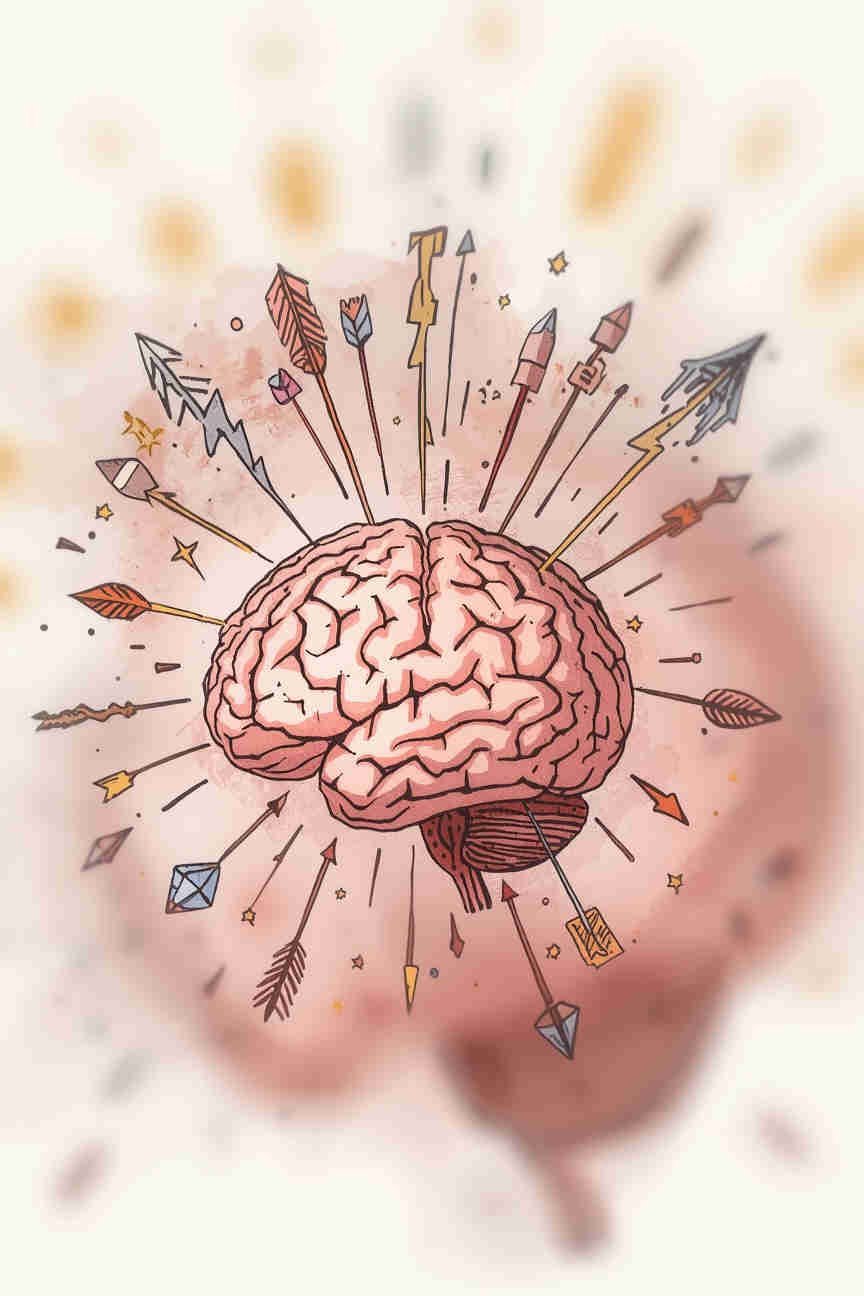
How Positive Stimuli Shape Our Habits
Why do we keep checking our phones, returning to favorite games, or sticking to a gym routine? The secret lies in how our brains respond to positive stimuli.
Psychologist B. F. Skinner (1938) demonstrated that behaviors followed by rewarding outcomes are more likely to be repeated—a principle known as positive reinforcement. Modern neuroscience has mapped this to the brain's reward circuits, especially dopamine pathways in the striatum and prefrontal cortex (Schultz, 1997; Wise, 2004). Each time a pleasurable stimulus—like praise, points, or a pleasant sound—follows an action, the brain strengthens the association.
Different stimuli can shape habits in distinct ways. Tangible rewards (money, food) create strong but sometimes short-lived habits (De Houwer et al., 2013). Social rewards (praise, likes, recognition) often build more sustainable behaviors because they engage our need for belonging (Izuma et al., 2008). Sensory stimuli—colors, sounds, or animations—trigger immediate pleasure and anticipation (Zald & Zatorre, 2011). Crucially, variable reinforcement—rewards delivered unpredictably—produces the strongest habit loops (Ferster & Skinner, 1957).
Neuroimaging studies show that even small symbolic rewards (points, badges) can activate the same dopaminergic reward systems as real-world gains (Sescousse et al., 2013). This explains why we can feel genuine excitement when unlocking a digital achievement.
Over time, the brain shifts from seeking rewards to forming automatic routines, where the cue-response link is strong even without conscious awareness (Wood & Rünger, 2016). In daily life, this explains why habits "stick" even when external rewards fade.
In summary: Computer and mobile games use these mechanisms masterfully. Points, colorful animations, unpredictable loot drops, and social recognition (leaderboards, likes) all act as positive stimuli reinforcing play. By layering sensory, social, and variable rewards, games exploit the same neural reinforcement systems Skinner studied decades ago—keeping players engaged, forming lasting habits, and sometimes even fostering compulsive play.
Key References
- Skinner, B. F. (1938). The Behavior of Organisms.
- Ferster, C. B., & Skinner, B. F. (1957). Schedules of Reinforcement.
- Schultz, W. (1997). Dopamine neurons and reward. Neuron, 15(2), 241–263.
- Wise, R. A. (2004). Dopamine, learning and motivation. Nature Reviews Neuroscience, 5(6), 483–494.
- Izuma, K. et al. (2008). Neural correlates of social influence. PNAS, 105(13), 10426–10431.
- Zald, D. H., & Zatorre, R. J. (2011). Music and reward. Annals of NY Academy of Sciences, 930(1), 1–7.
- De Houwer, J. et al. (2013). What is learning? Psychological Bulletin, 139(4), 843–868.
- Sescousse, G. et al. (2013). Processing of rewards in the human brain. Nature Reviews Neuroscience, 14(9), 589–600.
- Wood, W., & Rünger, D. (2016). Psychology of habit. Annual Review of Psychology, 67, 289–314.